Tuesday, June 30, 2015

My toddler can read! (Spotlight)


All images are from originatorkids(dot)com
I have not been paid or compensated in any way for this endorsement.


My almost three year old picks up the little tin box. "F, I, R, S, T, A, I, D, K, I, T."

"Very good, sweetie!" You're getting good at reading your letters!"

"First add kite!"

"Wait, what?!?!, What does that say?"

"First add kite!"

"HunnYYYYYY!!!!!"

That's when I realized that my toddler could read. Of course, after the initial shock, I corrected the words. Then I ran around finding words he could read. Amazing! My hubby and I have been working on his letters and numbers and read to him regularly. Plus I bought the app he's been using. But I was still amazed at the fact that he was.... reading!!!

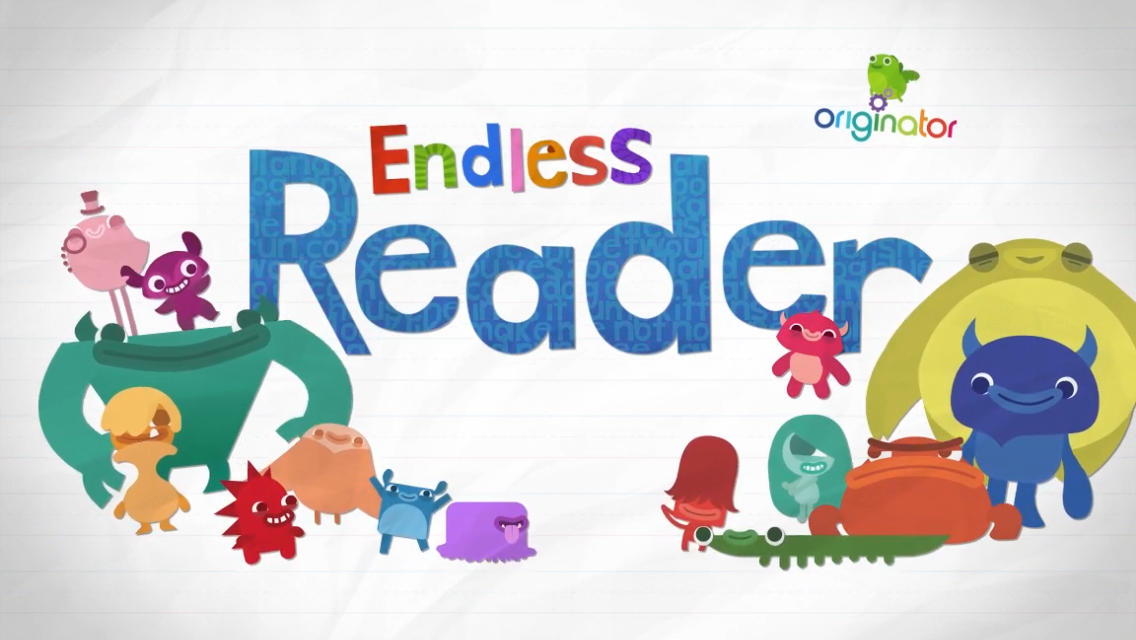
The app is called Endless reader.  

It's available on the Apple and Android. I'm not sure about Windows. There is a free version with a few words to test the waters with your child, which is what we did. Each letter has it's own sound and each word being taught is played with, sounded out and read in a sentence. It's really cute and to be totally honest, can sometimes be a little annoying due to the repetition of it. But kids love it. Maybe your child will too.

Enjoy!
Cherise, the Mompreneur

Sunday, June 21, 2015

origin of Father's Day

Taken from Wikipedia:

Father's Day is a celebration honoring fathers and celebrating fatherhood, paternal bonds, and the influence of fathers in society. Many countries celebrate it on the third Sunday of June, though it is also celebrated widely on other days by many other countries.

History


A father with his son by the lake
Father's Day was inaugurated in the United States in the early 20th century to complement Mother's Day in celebrating fathers and male parenting.

First observance

Grace Golden Clayton may have been inspired by Anna Jarvis' work to establish Mother's Day; two months prior, Jarvis had held a celebration for her dead mother in Grafton, West Virginia, a town about 15 miles (24 km) away from Fairmont.[citation needed]
After the success obtained by Anna Jarvis with the promotion of Mother's Day in Grafton, West Virginia, the first observance of a "Father's Day" was held on July 5, 1908, in Fairmont, West Virginia, in the Williams Memorial Methodist Episcopal Church South, now known as Central United Methodist Church.[1] Grace Golden Clayton was mourning the loss of her father when, on December 1907, the Monongah Mining Disaster in nearby Monongah killed 361 men, 250 of them fathers, leaving around a thousand fatherless children. Clayton suggested her pastor Robert Thomas Webb to honor all those fathers.[2][3][4][5]
Clayton's event did not have repercussions outside of Fairmont for several reasons, among them: the city was overwhelmed by other events, the celebration was never promoted outside of the town itself and no proclamation was made in the city council. Also two events overshadowed this event: the celebration of Independence Day July 4, 1908, with 12,000 attendants and several shows including a hot air balloon event, which took over the headlines in the following days, and the death of a 16-year-old girl on July 4. The local church and council were overwhelmed and they did not even think of promoting the event, and it was not celebrated again for many years. The original sermon was not reproduced in press and it was lost. Finally, Clayton was a quiet person, who never promoted the event or even talked to other persons about it.[3][4][5]

Establishment of holiday


Father and daughter
In 1910, a Father's Day celebration was held in Spokane, Washington, at the YMCA by Sonora Smart Dodd, who was born in Arkansas.[6] Its first celebration was in the Spokane YMCA on June 19, 1910.[6][7] Her father, the civil war veteran William Jackson Smart, was a single parent who raised his six children there.[6] After hearing a sermon about Jarvis' Mother's Day in 1909 at Central Methodist Episcopal Church, she told her pastor that fathers should have a similar holiday honoring them.[6] Although she initially suggested June 5, her father's birthday, the pastors did not have enough time to prepare their sermons, and the celebration was deferred to the third Sunday of June.[1][8] Several local clergymen accepted the idea, and on 19 June 1910, the first Father's Day, .... (To read more, click here.)

Until next time.
Cherise, the Mompreneur

Friday, June 19, 2015

origin of Juneteenth

Taken from Wikipedia

Juneteenth, also known as Juneteenth Independence Day or Freedom Day, is a holiday that commemorates the announcement of the abolition of slavery in Texas in June 1865, and more generally the emancipation of African-American slaves throughout the Confederate South. Celebrated on June 19, the term is a portmanteau of June and nineteenth[1][2] and is recognized as a state holiday or special day of observance in most states.
The holiday is observed primarily in local celebrations. Traditions include public readings of the Emancipation Proclamation, singing traditional songs such as "Swing Low, Sweet Chariot" and "Lift Every Voice and Sing", and readings by noted African-American writers such as Ralph Ellison and Maya Angelou.[3] Celebrations may include parades, rodeos, street fairs, cookouts, family reunions, park parties, historical reenactments, or Miss Juneteenth contests.[4]

History


Ashton Villa, from whose front balcony General Order #3 was read on June 19, 1865
During the American Civil War, President Abraham Lincoln issued the Emancipation Proclamation on September 22, 1862, with an effective date of January 1, 1863. It declared all slaves to be freed in the Confederate States of America in rebellion and not in Union hands (this excluded Maryland, Delaware, Tennessee, "West" and Southeast Virginia and lower Louisiana, which were occupied by the Union). It also announced that the Union would start recruiting former slaves and free blacks to serve in the military and recruitment began in the spring of 1863. Slaves often escaped to Union lines for protection and many began to serve in the military. In some areas, contraband camps were set up to house the freedmen temporarily, as well as start schools and put adults to work. Lincoln had urged the governments in the Border States, which had remained in the Union, to free their slaves under a system of gradual abolition but none did so. Those slaves were not emancipated until the end of the war.
Even when slaves gained freedom, this was a difficult era. Conditions in contraband camps were crowded, with poor sanitation, as existed in most military encampments. Just as more soldiers on both sides died of disease rather than wounds, because of the social disruption from the war and general harsh conditions, many former slaves died of disease in the years from 1862 to 1870, including from a smallpox epidemic.[5]
More isolated geographically, Texas was not a battleground, and thus its slaves were not affected by the Emancipation Proclamation unless they escaped.[6] Planters and other slaveholders had migrated into Texas from eastern states to escape the fighting, and many brought their slaves with them, increasing by the thousands the number of slaves in the state at the end of the Civil War.[7]
By 1865, there were an estimated 250,000 slaves in Texas.[7] As news of end of the war moved slowly, it did not reach Texas until May 1865, and the Army of the Trans-Mississippi did not surrender until June 2.[7] On June 18, 1865, Union General Gordon Granger arrived at Galveston Island with 2,000 federal troops to occupy Texas on behalf of the federal government.[6] On June 19, standing on the balcony of Galveston's Ashton Villa, Granger read aloud the contents of "General Order No. 3", announcing the total emancipation of slaves:
The people of Texas are informed that, in accordance with a proclamation from the Executive of the United States, all slaves are free. This involves an absolute equality of personal rights and rights of property between former masters and slaves, and the connection heretofore existing between them becomes that between employer and hired labor. The freedmen are advised to remain quietly at their present homes and work for wages. They are informed that they will not be allowed to collect at military posts and that they will not be supported in idleness either there or elsewhere.[8]

Emancipation Day celebration in Richmond, Virginia in 1905
Former slaves in Galveston rejoiced in the streets after the announcement, although in the years afterward many struggled to work through the changes against resistance of whites. But, the following year, freedmen organized the first of what became annual celebrations of Juneteenth in Texas.[8] Barred in some cities from using public parks because of state-sponsored segregation of facilities, across parts of Texas, freed people pooled their funds to purchase land to hold their celebrations, such as Houston's Emancipation Park,Mexia's Booker T. Washington Park, and Emancipation Park in Austin.[7][8]
In the early 20th century, economic and political forces led to a decline in Juneteenth celebrations. From 1890 to 1908, Texas and .... To continue reading,, please click here.

Until next time!
Cherise, the Mompreneur

Thursday, June 18, 2015

Origin of Ramadan

Taken from Wikipedia.

Ramadan

Ramadan (/ˌræməˈdɑːn/; Arabic: رمضانRamaḍān, IPA: [rɑmɑˈdˤɑːn];[note 1] also transliterated Ramazan, Ramzan, Ramadhan, or Ramathan) is the ninth month of the Islamic calendar,[3] and is observed by Muslims worldwide as a month of fasting to commemorate the first revelation of the Quran to Muhammad according to Islamic belief.[4][5] This annual observance is regarded as one of the Five Pillars of Islam.[6] The month lasts 29–30 days based on the visual sightings of the crescent moon, according to numerous biographical accounts compiled in the hadiths.[7][8]
The word Ramadan comes from the Arabic root ramiḍa or ar-ramaḍ, which means scorching heat or dryness.[9] Fasting is fardh (obligatory) for adult Muslims, except those who are suffering from an illness, travelling, are elderly, pregnant, breastfeeding, diabetic or going through menstrual bleeding.[10] Fasting the month of Ramadan was made obligatory (wājib) during the month of Sha'aban, in the second year after the Muslims migrated from Mecca to Medina. Fatwas have been issued declaring that Muslims who live in regions with natural phenomenon such as the midnight sun or polar night should follow the timetable of Mecca.[11]
While fasting from dawn until sunset, Muslims refrain from consuming food, drinking liquids, smoking, and engaging in sexual relations with one's spouse. Muslims are also instructed to refrain from sinful behavior that may negate the reward of fasting, such as false speech (insulting, backbiting, cursing, lying, etc.) and fighting.[12] Food and drink is served daily, before dawn and after sunset.[13][14] Spiritual rewards (thawab) for fasting are also believed to be multiplied within the month of Ramadan.[15] Fasting for Muslims during Ramadan typically includes the increased offering of salat (prayers) and recitation of the Quran.[16][17]

History

Chapter 2, Revelation 185, of the Quran states:
The month of Ramadan is that in which was revealed the Quran; a guidance for mankind, and clear proofs of the guidance, and the criterion (of right and wrong). And whosoever of you is present, let him fast the month, and whosoever of you is sick or on a journey, a number of other days. Allah desires for you ease; He desires not hardship for you; and that you should complete the period, and that you should magnify Allah for having guided you, and that perhaps you may be thankful.[Quran 2:185]
It is believed that the Quran was first revealed to Muhammad during the month of Ramadan which has been referred to as the "best of times". The first revelation was sent down on Laylat al-Qadr (The night of Power) which is one of the five odd nights of the last ten days of Ramadan.[18] According to hadith, all holy scriptures were sent down during Ramadan. The tablets of Ibrahim, the Torah, the Psalms, the Gospel and the Quran were sent down on 1st, 6th, 12th, 13th[note 2] and 24th Ramadan respectively.[19]
According to the Quran, fasting was also obligatory for prior nations, and is a way to attain taqwa, fear of God.[20][Quran 2:183] God proclaimed to Muhammad that fasting for His sake was not a new innovation in monotheism, but rather an obligation practiced by those truly devoted to the oneness of God.[21] The pagans of Mecca also fasted, but only on tenth day of Muharram to expiate sins and avoid droughts.[22]
The ruling to observe fasting during Ramadan was sent down 18 months after Hijra, during the month of Sha'aban in the second year of Hijra in 624 CE.[19]
Abu Zanad, an Arabic writer from Iraq who lived after the founding of Islam,in around 747 CE, wrote that at least one Mandaean community located in al-Jazira (modern northern Iraq) observed Ramadan before converting to Islam.[23][not in citation given]
According to Philip Jenkins, Ramadan comes "from the strict Lenten discipline of the Syrian churches".[24][dubious ] However, this suggestion is based on the orientalist idea that the Qur'an itself has Syrian origins, which was refuted by Muslim academics such as M. Al-Azami.[25]

To read more, click here.

Until next time,
Cherise, the Mompreneur


Sunday, June 14, 2015

Origin of Flag Day

Taken from Wikipedia

Flag Day (United States)


U.S. Flag Day
US Flag Day poster 1917.jpg
Poster commemorating the 140th Flag Day on June 14, 1917
Observed byUnited States
DateJune 14
Next timeJune 14, 2016 (2016-06-14)
Frequencyannual
In the United States, Flag Day is celebrated on June 14. It commemorates the adoption of the flag of the United States, which happened on that day in 1777 by resolution of the Second Continental Congress.[1] The United States Army also celebrates the Army Birthday on this date; Congress adopted "the American continental army" after reaching a consensus position in the Committee of the Whole on June 14, 1775.[2][3]
In 1916, President Woodrow Wilson issued a proclamation that officially established June 14 as Flag Day; in August 1949, National Flag Day was established by an Act of Congress. Flag Day is not an official federal holiday. Title 36 of the United States Code, Subtitle I, Part A, CHAPTER 1, § 110[4] is the official statute on Flag Day; however, it is at the President's discretion to officially proclaim the observance. On June 14, 1937, Pennsylvania became the first U.S. state to celebrate Flag Day as a state holiday, beginning in the town of Rennerdale.[1] New York Statutes designate the second Sunday in June as Flag Day, a state holiday.[5]
Perhaps the oldest continuing Flag Day parade is at Fairfield, Washington.[6] Beginning in 1909 or 1910, Fairfield has held a parade every year since, with the possible exception of 1918, and celebrated the "Centennial" parade in 2010, along with some other commemorative events.
Appleton, Wisconsin claims to be the oldest National Flag Day parade in the nation, held annually since 1950. [7] It was also named "Most Patriotic City in America" by AmericaTheBeautiful.com in 2008. [8]
Quincy, Massachusetts has had an annual Flag Day parade since 1952 and claims it "is the longest-running parade of its kind in the nation."[9] The largest Flag Day parade is held annually in Troy, New York, which bases its parade on the Quincy parade and typically draws 50,000 spectators.[1][10] In addition, the Three Oaks, Michigan Flag Day Parade is held annually on the weekend of Flag Day and is a three-day event and they claim to have the largest flag day parade in the nation as well as the oldest.[11]

To read more, click here.

Until next time,
Cherise, the Mompreneur

Friday, June 12, 2015

Origin of Loving Day

Taken from Wikipedia

Loving Day is an annual celebration held on June 12, the anniversary of the 1967 United States Supreme Court decision Loving v. Virginia which struck down all anti-miscegenation laws remaining in sixteen U.S. states."[1][2][3] In the United States, anti-miscegenation laws were U.S. state laws banning interracial marriage, mainly forbidding marriage between non-whites and whites.
Loving Day is not an officially recognized holiday by the U.S. government, but there is a movement to persuade U.S. PresidentBarack Obama to make it so.[4][5] Loving Day is the biggest multiracial celebration in the United States.[6]

History

The "Loving" side of the U.S. Supreme Court case consisted of Mildred and Richard Loving, a black woman and a white man. They first met when she was 11 and he was 17. He was a family friend and over the years they started courting. After she became pregnant, they got married in Washington, D.C., in 1958, when she was 18.[7] Reportedly, Mildred didn't realize that interracial marriage was illegal, and they were arrested a few weeks after they returned to their hometown north of Richmond, Virginia. They pleaded guilty to charges of "cohabiting as man and wife, against the peace and dignity of the Commonwealth," and avoided jail time by agreeing to leave Virginia. They moved to Washington, D.C., and began legal action by writing to U.S. Attorney General Robert F. Kennedy. Kennedy referred the case to the American Civil Liberties Union. After the Warren Courtunanimously ruled in favor of the young couple, they returned to Virginia, where they lived with their three children. Mildred Loving died May 5, 2008 at the age of 68. Richard Loving had died about thirty-three years earlier in a car accident. Each June 12, the anniversary of the ruling, Loving Day events around the country mark the advances of mixed-race couples.

Legacy

Many organizations sponsor annual parties across the country, with Lovingday.org providing an online legal map, courtroom history of anti-miscegenation laws, as well as offering testimonials by and resources for interracial couples. Inspired by Juneteenth (which commemorates the end of slavery in the state of Texas), Loving Day seeks both to commemorate and celebrate the Supreme Court's 1967 ruling, keeping its importance fresh in the minds of a generation which has grown up with interracial relationships being legal, as well as explore issues facing couples currently in interracial relationships. The Loving Day website features information, including court transcripts of the Loving v. Virginia case and of other court cases in which the legality of anti-miscegenation laws was challenged. To celebrate the holiday, people are encouraged to hold parties in which the case and its modern-day legacy are discussed, in smaller settings such as living rooms, backyards, etc., as well as in larger gatherings. Ken Tanabe is credited with forming the idea for Loving Day. He created the idea in 2004 for his senior thesis at Parsons the New School of Design.[6]
To continue reading, please click here.

Until next time!
Cherise, the Mompreneur

Tuesday, June 9, 2015

Moms and Swimsuits CAN get along!

JESSICA N TURNER
From Huffington Post

I read this article entitled, Mom's, Put on that Swimsuit by Jessica N. Turner (click her name for the article). It resonated something with me. Isn't it sad that most of us moms have to fight with the choice every summer of whether or not to put on a swimsuit? What's sadder, as Jessica pointed out, is that most of us choose not to.

In her piece in the Huffington Post, she reminds moms everywhere that "when women stay on the sidelines because of insecurity, we are modeling unhealthy behavior to our children and we are missing out."

She also wanted to remind moms to remember that "Your swimsuit does not define you.... You are a mother. you are beautiful."

Enough said.

Until next time!
Cherise, the Mompreneur

Monday, June 1, 2015

Cannoli Dip

Image from Galleryhip(dot)com


Oh my-lanta!!!!!!!! I love me some canollis!!!! (Cue Italian music in the background!)

The problem I have is I'd be destitute if I indulged in every cannoli craving I had. It's that serious. But I needed a solution. Off to Google!!!

Now here's the problem. My family had no problem indulging in the many recipes we tried to get that perfect cannoli taste. A few pounds later (wink, wink), Im still trying to figure out why this is so hard. Why can't we get a great recipe? Why are the great cannoli makers of our history hiding their secrets of that yummy, creamy goodness? A little dramatic? I digress.

So off I was to channel my inner Monica Gellar-Bing (Friends fans, anyone?) and play with recipes. And here it is! I may still tweak it as we go (I promise to share those with you as I do!). But for now, I need to make an appointment with my gym.


Cannoli Dip
2 cups ricotta cheese
1 (8 oz) package cream cheese
2 cups confectioner's sugar
1 tsp vanilla extract
1 tsp almond extract
1 cup mini chocolate chips

1. Beat ricotta and cream cheeses in a bowl until smooth.
2. Add sugar and extracts. Continue to mix until the sugar is completely incorporated.
3. Fold the chips into the cheese mixture.
4. Cover the bowl with plastic wrap and refrigerate until chilled, at least 15 minutes.

Server with pizzelle cookies, waffle cones or graham crackers.

Until next time!
Cherise, the Mompreneur